


By: Sylene Argent, Local Journalism Initiative Reporter, Essex Free Press
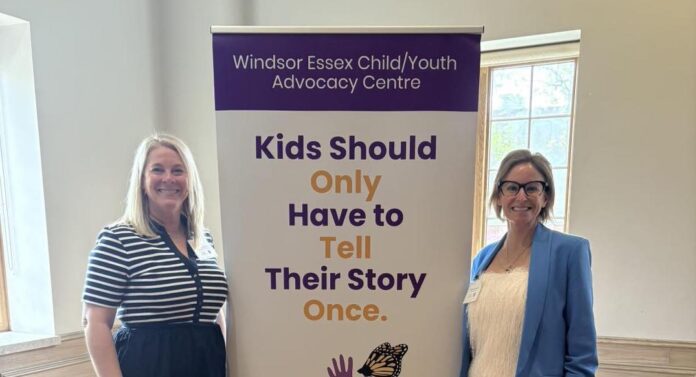
The Windsor-Essex Child/Youth Advocacy Centre (WECYAC) hosted its fifth annual Victims and Survivors of Crime Week Breakfast last Friday morning, which highlighted the realities youth face when they experience harm, seek help, and move through systems designed to support them.
Every year, the event is held to coincide with federally recognized Victims and Survivors of Crime Week.
“The youth panel and keynote speakers, they gave their honest feedback. That was very insightful to a room full of people,” Dr. Nila Das said, who is the Executive Director of WECYAC.
More than 175 individuals – representing a range of groups, organizations, and area municipal council reps and MPs – attended the event at the Fogolar Furlan Club of Windsor to learn about WECYAC.
It is an organization that steps in as the first contact for youths in need. Its staff makes a call to parents of those under 16, sets up an interview to assess the needs of each youth and family with police, CAS, or Indigenous support.
A conversation is then had with parents or caregivers, because they typically do not have trauma education in how to understand trauma response. After six-months, WECYAC conducts navigation for them with referrals they may need.
A team of six at WECYAC completes all of that.
“When they come into the centre, that means something happened to them,” Dr. Das said. That could be sexual or physical abuse, they witnessed something, or there was a homicide, substance abuse, or online sexual assault.
“A lot of the time, we miss hearing or listening to our children and youth,” Dr. Das said of the importance of hosting the event. There is not a single platform where municipal councillors, media, professionals, and police can come together and understand the issues, network, collaborate, and think about how they can make a difference to the children and youth of Windsor/Essex.
“These are our children, and if we do not think about them, who will?” she asked.
“Nowadays, what I see, the problems cannot be solved by independent group meetings,” Dr. Das said. “It’s cross-sector, systemic, and everything touches each other. Housing touches homelessness. Homelessness touches preconditional mental health. There are traumas. There are parents losing jobs, [Intimate Partner Violence] IPV, something happening at school, bullying, online exposures.”
Any single issue cannot be tackled without bringing everyone together. She hoped the event would let participants reflect on what they heard, and that it would lead to change.
Dr. Das is noticing more support from local decision-makers since hosting the inaugural event five-years ago. Just 20 people attended that first event. To watch its attendance grow has been incredible.
“Now, I can not stop the registration,” Dr. Das said.
Part of the need to host the event is to have decision-makers think about youth needs, noting the importance of enabling their ability to lead one day.
“We are dealing with complex issues,” she said, adding that mental health is a big concern for every child and youth navigating the system anywhere in the region. That is not unique to Windsor-Essex. It is a problem Ontario-wide, Canada-Wide, and worldwide.
“But we do not have enough services or supports needed to help them, because it is too overwhelming for the system,” Dr. Das explained.
During its last fiscal year, WECYAC provided services to 897 (629 children and 268 adults) new case individuals in the region. That was slightly up from the previous year.
Most of its clients are female, but male is increasing, Dr. Das relayed. The most served age range was youths ages six to 12-year-olds.
One change she saw in demographics this year was that there was an increase in biracial kids coming in for help. Dr. Das noted WECYAC didn’t even have a biracial category previously, but added one.
Around 33% of the children WECYAC assisted reported mental health concerns or issues coming into the centre.
A trend she has noticed since she joined WECYAC five-years ago is an increase in the victim not knowing their accused, from zero to 9%. That is because of online interactions, she explained.
Parents are still in the top category of the accused, indicating that a lot of things happen in the home. Youth harming another youth, however, has increased, she noted.
She added that most of the male children who seek help through WECYAC come in because of physical abuse, and most of the females come in for sexually-related issues, either assault, abuse, or exploitation. Physical abuse, in most cases, has a secondary abuse, which is domestic violence or a history of IPV in the family.
Youths as young as 10 can be exposed to sexual content, Dr. Das relayed. That is why she believes sex ed needs to start earlier, something the youth panel noted during the event. That includes teaching consent, boundaries, and relationships. By the time they are teens, they are already being exposed to sexual content.
The youth panel also instilled the message of meeting with them in their time of need not as a professional, but as a person.
“A lot of good conversation happened,” Dr. Das said, adding the youth panellist did an amazing job. She highlighted that they expressed the importance of “listening before judging.”
Funding is a big challenge for WECYAC, which is now eight-years-old. It is in a model that is collaborative, and the government doesn’t know how to support it, Dr. Das explained. It has no base funding from the city or area municipalities. It works from grant-to-grant.
She hopes the event will help everyone to understand the importance of the program.
“All of us in that room heard about what the kids want. We usually don’t consult with the kids or the youth before starting any service,” Dr. Das said. A lot of things they suggested were not complex or required additional resources. “We just need to be present and not treat them as cases.”